A campus robot won't need to look like a person to change daily work. The first useful systems will move supplies, clean floors, guide visitors, or inspect buildings while staff focus on tasks that need judgment.
Campus leaders asking where automation fits should start with the work, not the robot's shape. The right question is which campus jobs repeat often enough, follow clear rules, and create a safe path for people nearby.
Quick read
- Start with deliveries, cleaning, inspection, and access checks.
- Keep people responsible for care, teaching, safety decisions, and unusual cases.
- Measure time saved, failed runs, repairs, and complaints before expanding.
Where robots fit first
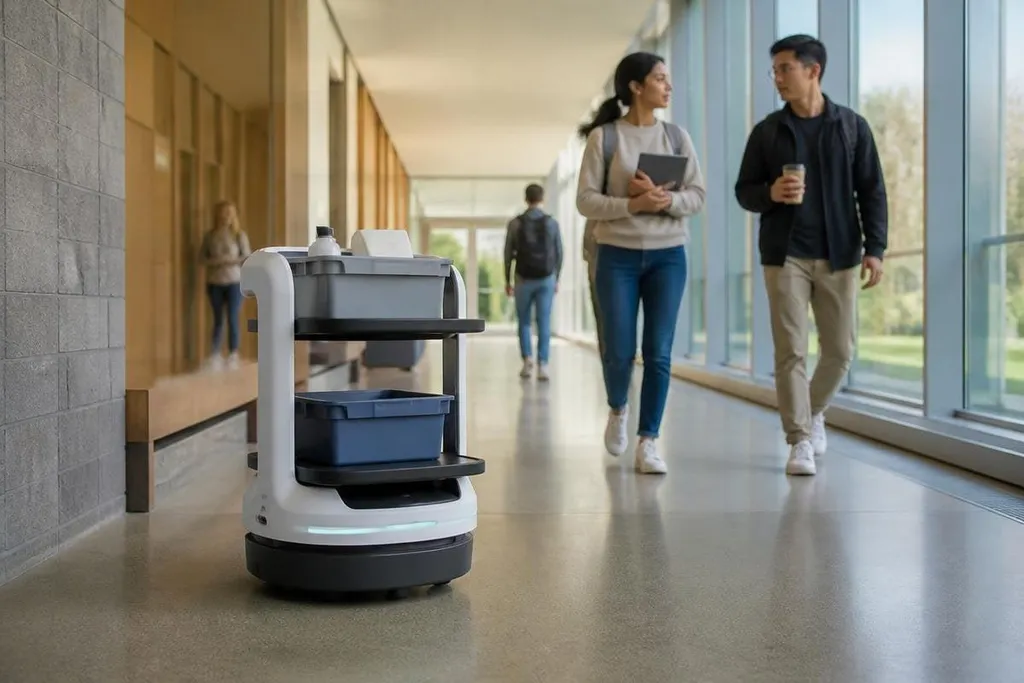
Campus logistics are a clear starting point. A mobile robot could carry library books, lab samples, mail, meals, or maintenance parts between fixed locations. It would need maps, doors that open safely, and a way to stop when a person steps into its path.
That work matters because staff often lose time walking between buildings or waiting for an item to arrive. A robot that handles a repeat route can make the handoff more predictable, but only if someone can take over when an elevator, door, or crowded hallway blocks it.
Cleaning offers a similar path. Floor robots can follow marked areas and return to a charging point, while staff handle stairs, spills, furniture, and rooms with unusual layouts. The machine does the repeat pass; a person checks the places where a fixed route does not work.
Inspection may bring another use. A robot with cameras could check roofs, tunnels, pipes, or empty rooms after a storm or maintenance shutdown. That can reduce the number of risky visits, though a camera record still needs a trained person to judge what requires repair.
What changes for students and staff
The visible change may be small. A delivery robot crossing a campus at midday attracts attention, but the larger effect comes from work that happens in the background: supplies arrive on schedule, floor checks leave a record, and building faults reach the right team sooner.
Students may also meet robots in labs and classrooms. A mobile platform can give engineering students a way to test mapping, robot control, and human safety without building the whole system from scratch. That value depends on access, repair support, and clear rules for using the equipment.
Staff roles will shift when a robot takes over a repeat route. Someone still needs to plan routes, check batteries, review error logs, clean sensors, and respond to blocked paths. Buying the machine without funding those jobs leaves a parked machine.
Campus leaders can compare Robot24.com robotics coverage with vendor demos before approving a campus trial. Reports that name the robot, test site, date, and task give the team facts to check before the machine reaches a shared campus space.
The limits are on the campus map
University campuses are hard places for mobile robots. People change direction without warning. Events move furniture. Construction closes paths. Wet floors, glass doors, poor lighting, and crowded entrances can all affect a robot's sensors.
Privacy also needs a firm rule before cameras arrive. A system that records hallways may collect faces, conversations, or movement patterns. The university should set limits on storage, access, and deletion before the first test run, with a named person responsible for each decision.
Accessibility belongs in the first design review. A robot that blocks a ramp, narrows a corridor, or speaks over a hearing aid creates a problem even if its route works on paper. Campus staff, students, and disability services should test the system in the places where it will run.
The strongest opposing view is that campus work is too varied for automation. That view fits many tasks, but it misses repeat routes with clear stopping points. I'd fund a small route trial before buying a fleet.
A practical decision guide
Use this check before a university signs a robot contract:
- Name the route: Write down the buildings, doors, lifts, times, and handoff points.
- Set the human fallback: Choose who takes control when the robot stops or loses its map.
- Count the exceptions: Record blocked paths, people nearby, weather, spills, and schedule changes.
- Check access needs: Test ramps, lifts, corridor width, noise, lighting, and safe passage.
- Set data rules: Decide what cameras record, who can see it, and when the data is deleted.
- Price the full service: Include charging, software, repairs, staff time, training, and replacement parts.
A useful pilot ends with a decision, not a permanent trial. If the robot completes its route safely, staff can recover from its failures, and the full cost fits the work saved, the university has a case for a second route.
If those conditions fail, the right result is to stop and choose a different task.